
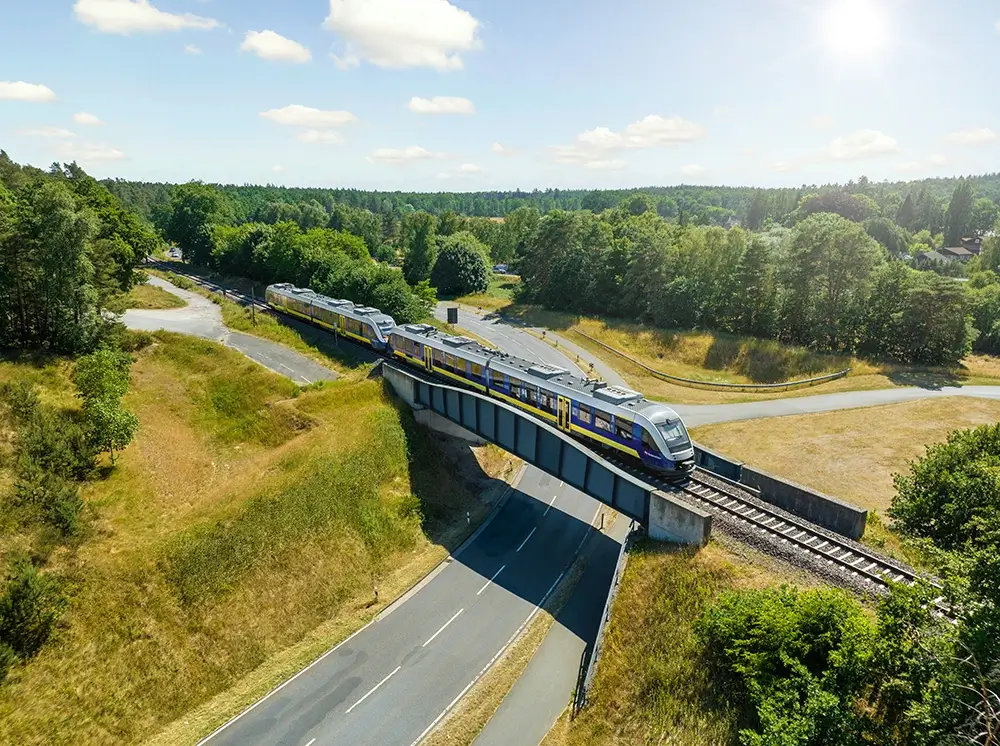
Regionalverkehre Start Deutschland GmbH wants to make greater use of quality and personnel data for well-founded decisions but is facing significant restrictions due to manual processes and heterogeneous data sources.
Reporting is carried out primarily via individual Excel files and PowerPoint presentations, while external service providers provide operational data in various formats. This diversity makes a uniform evaluation and an integrated view of quality indicators such as delays, cancellations, or the staffing of trains difficult. In the area of personnel, too, relevant information is available in isolation in various systems. In the future, a central, integrated database should create transparency, increase analytical capacity, and enable targeted operational optimizations.
How can operational and personnel data from different sources be consolidated to provide consistent and reliable key figures for management?
How can transparency be created across operational and strategic areas of the company in order to make better decisions?
How can the causes of quality problems such as delays or failures be systematically analyzed in order to derive targeted measures to improve performance and reduce costs?
The various operational and personnel data from both external and internal systems are transferred into a uniform structure using the Azure Data Factory.
The cleaned and harmonized data is stored centrally in a PostgreSQL database in Azure and forms the basis for analyses.
In close cooperation with specialist departments, KPI definitions such as failure rate or punctuality are precisely defined to ensure comparability.
Based on this data, Power BI creates an interactive management dashboard that clearly visualizes quality and personnel data.
The system is constantly being expanded so that new rail networks and data sources are integrated and the “start cockpit” ensures an overall overview at all times.
The result is the “start Cockpit”, a central Power BI dashboard that, for the first time, bundles all relevant operational and personnel data in one interface. It creates transparency about punctuality, outages and personnel resources and enables data-based decisions. As a result, start improves planning quality, reduces contract penalties and increases efficiency and customer satisfaction.
Regionalverkehre Start Deutschland GmbH wanted to make greater use of quality and personnel data for well-founded decisions. The aim was to replace manual reporting processes, centralize data from various sources and establish a uniform data view for management and departments.
Prior to the project, Regionalverkehre Start Deutschland GmbH reported primarily via individual Excel files and PowerPoint presentations. At the same time, external service providers provided operating data in various formats, and personnel data was also available in isolation in various systems. As a result, there was no integrated view of key figures such as punctuality, cancellations or train crew.
taod developed a central reporting solution with Power BI and Azure Data Factory for Regionalverkehre Start Deutschland GmbH. The various operational and personnel data from internal and external systems were transferred into a uniform structure, stored centrally in a PostgreSQL database in Azure and then visualized in an interactive management dashboard.
The introduction included data integration, data preparation, the joint definition of central KPIs and the development of an interactive Power BI dashboard. The system was then set up in such a way that further rail networks and data sources could be continuously integrated and the “start cockpit” maintains an overall overview of quality and personnel data.
With the “start Cockpit”, Regionalverkehre Start Deutschland GmbH received a central control instrument for the first time that bundles all relevant operational and personnel data in one interface. The dashboard makes 750 million train kilometers a year transparently analyzable, automatically integrates more than 10 heterogeneous data sources and supports the uniform monitoring of 4 active networks. According to the case study, this improves planning quality, reduces costs and contractual penalties and increases efficiency and customer satisfaction.
Let us answer your questions during a non-binding initial consultation.

BI strategy, tool selection or modern dashboards. We advise you and implement.

Case study on the development of self-service BI at Raiffeisen South Tyrol.

All important competencies and technologies for successful BI & Data Analytics initiatives in one white paper!