Innovation creates solutions


How taod identifies innovations in data & AI and puts them into practice
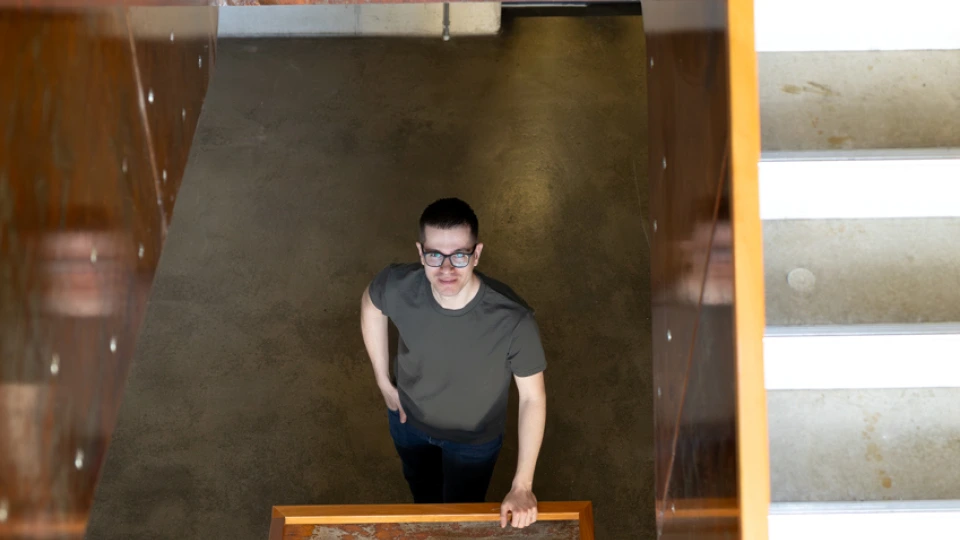
How do you recognize whether a new technology really has potential? As head of the innovative round at taod, Andreas Huppert is asking himself exactly this question. In an interview, he gives an insight into how he and his team scout and evaluate innovations in the area of Data & AI and thus solve real customer problems.
Andreas, you are leading the Innovative Round at taod.
What does innovation mean to you?
For me, an innovation is simply an idea or invention that is successfully adapted on the market and results in new products or services. At taod, we understand innovation to mean anything that changes the way we work and enables us to achieve better results for our customers. This can, for example, be new technologies or be methods.
Especially in fast-moving industries such as IT, new trends and technologies are constantly emerging. How do you deal with that?
I don't think that everything that says innovation involves innovation. Of course, we are flooded with tons of innovations in our field, but at the same time, many things disappear quickly or are no better than existing ones on closer inspection. The challenge is to identify the changes in background noise that are relevant to us and to use them sensibly.
So you're not afraid of losing the thread?
Not really. On the one hand, I've come to terms with the fact that I can't always be perfectly informed about all developments; on the other hand, truly disruptive innovations that are completely new and unprecedented are actually rather rare. At the end of the day, these are often things that further develop well-known approaches or simply make them more usable. I usually understand them quickly, even though I haven't followed them from the start. As a result, I am still quite relaxed about this, at least so far.
“Not everything that says innovation includes innovation.”
Is there an innovation that you've adapted recently?
Smart home at last. I'm definitely not one of the early adopters, but the concept is now so sophisticated that it's really practical.
Why did you create the Innovative Round at taod?
For us as a consultant, it is essential that we deliver the best possible result for our customers, and that includes technologies and methods that are up to date. Many of our innovations are the result of the personal interest and commitment of our consultants. At the same time, we also wanted to give the topic of innovation a visible and structural priority.
How would you like to achieve this?
As part of the Innovative Round, we created the role of “Innovation Scout” at taod. We currently have five experienced consultants who deal structurally with market developments. In order to get a holistic view of the innovation potential found, our Innovation Scouts have different areas of expertise and work together across divisions. Each of our fields of activity is covered. The aim is to identify relevant innovations, design concrete application scenarios and ultimately decide whether we want to apply an innovation to us or not.
Innovation scouts are therefore on the lookout for the latest innovations on the market.
Among other things. However, it is not only about discovering innovations, but also about the targeted analysis of these findings with regard to possible application scenarios and their actual added value. Based on this analysis, we develop a systematic evaluation procedure to find out whether the promised benefits are actually being shown in practice. At the same time, we see ourselves as an interface — both to projects in which we specifically test and implement innovations, as well as to marketing and business development, in order to strategically think ahead and make new impulses visible.
How do you organize yourself?
We meet every two weeks to discuss the latest partial results and new findings. In these monthlies, we decide together how we will continue to deal with certain topics — whether to dive deeper, test something, or perhaps even consciously reject it. Of course, we document our results and interim results. There is also a Kanban board to keep an eye on the status of individual evaluations. In addition, there is a common communication channel in teams, through which we are constantly in contact — i.e. share topics, articles or ideas from time to time, even between official appointments.
And how do you decide whether to pursue an innovation or not?
We have developed a multi-phase, yet relatively flexible process for prioritizing innovations. At every step, we strive to more clearly identify the potential added value of an innovation compared to existing solutions. At the same time, we identify critical points on which the success of the innovation in practice depends. Even at this early stage, we may decide not to pursue an issue. This process results in a proposal for an internal project, in which the hypotheses and critical issues raised are tested. The results and experiences from this evaluation project then serve as a basis for deciding whether we want to adopt an innovation at taod or in our projects.
“We often create innovations directly from projects.”
What challenges do you see when introducing new innovations to companies in general and taod in particular?
As consultants, we have a lot of pressure in customer projects and little space for experiments. A major challenge for us is therefore to quickly catch up with our expectations in terms of know-how. This involves a significant investment and is therefore something that we must include in our assessment of an innovation. In general, the human factor in introducing an innovation should not be underestimated and should not be ignored. Especially when innovation means that old solutions disappear and are not just supplemented, rejection or skepticism quickly ensues. Here, it is important to communicate transparently and to clearly convey what the added value consists of — especially in practice.
How do you ensure that this added value actually exists?
For us, real added value is only created when innovation solves specific problems for our customers — which is why we always think of innovation from the customer and real challenges. For us, genuine innovation always means customer benefits. We can't rely on marketing promises. Of course, our broad project experience helps us here, so that we can take a closer look at exactly the points that actually matter.
Customer feedback is certainly also crucial in this context. How does this influence taod's innovation processes?
Very strong! For us, the topic of innovation is deliberately not detached from daily work, but is directly linked to it. The feedback from our projects is extremely valuable because it helps us to understand which problems really concern our customers and where established solutions reach their limits. We often create innovations directly from projects: A customer has a specific problem, existing methods do not work optimally and we recognize innovative potential here. This often leads directly to new solutions, or this feedback helps us in the innovative round, for example to prioritize potential innovations, or to evaluate or further develop suitable solutions in a targeted manner.
“The current AI hype is both overrated and underrated.”
The big hype currently lies, of course, in the area of AI. Are there also trends that, in your opinion, are overrated or underrated?
Interestingly enough, I'd say that the current AI hype is both overrated and underrated. From my point of view, AI products do not yet easily deliver what many expect from them. A great deal of know-how is currently required to achieve real added value or increases in productivity. At the same time, in my opinion, many people completely underestimate the disruption potential that these technologies will develop in just a few years, especially if the current pace of development continues. The way companies work, but also how we function as a society, will fundamentally change as a result. That is why it is important to position yourself well in this field now so as not to be overwhelmed by developments in a few years' time.
So just get started?
Personally, I'm a fan of simply trying things out — that brings the most insights. As a company, however, we don't have to be early adopters of everything. I would even say that a good dose of patience is also necessary. Our projects require solutions that have a certain degree of maturity and also work in the long term. In this respect, we strive for a healthy balance.
At taod, how do you try to promote a culture of creativity and the desire to try out new things?
We deliberately give our employees space to experiment. We create time windows and platforms where new ideas can be tested without immediate project pressure. An error culture in which failure is seen as an opportunity to learn is central to us. We also celebrate minor successes and findings — not just the big breakthroughs. In this way, we show that creativity and trying out new things are welcome and actively promoted.
This article was first published in our magazine data! Issue 5. Read now for free.
.webp)
%20(1).webp)