
Data Team
How to professionalize your data work and build competitive advantages with clear roles, smart organization and defined KPIs.
Download the white paper for freeA winning data team makes the difference between “We have data” and “We use data correctly.”
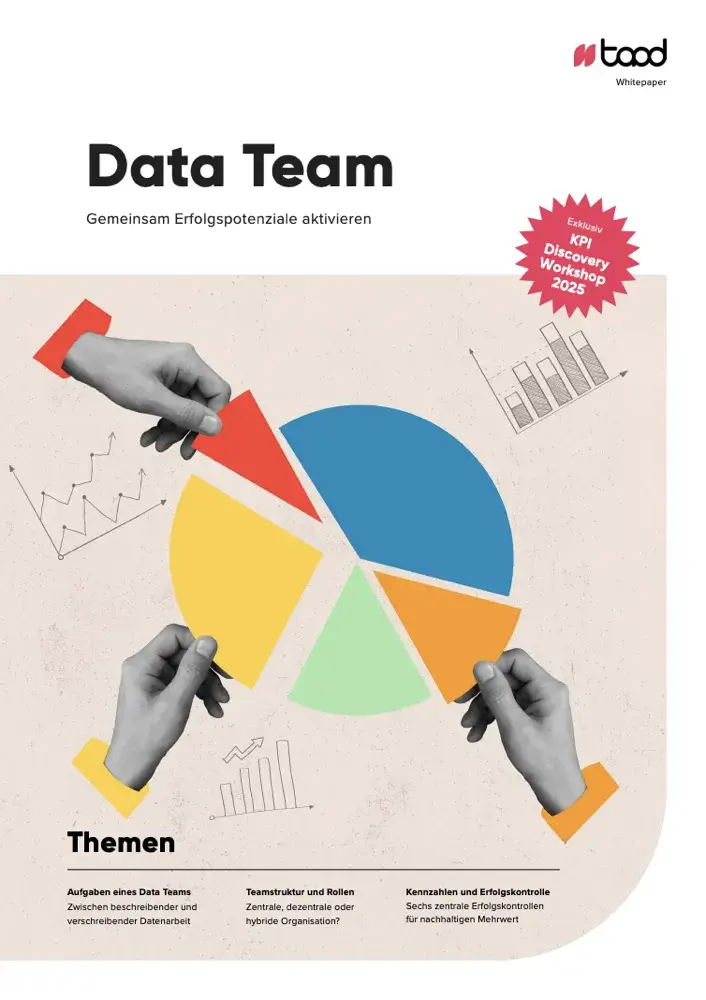
In a data-driven world, it is not just technology that determines success, but above all the team. A well-established data team ensures that data is not only collected, but also used in a targeted manner. It removes data silos, improves data quality, and provides analytics that enable informed decisions.
This white paper shows you which roles are essential, how to find the right team structure, and why defining common KPIs is the key to real added value — from quick wins to sustainable business transformation.
This white paper shows you which roles are essential, how to find the right team structure, and why defining common KPIs is the key to real added value — from quick wins to sustainable business transformation.
Four insights that move your data team forward
Find out how to future-proof your data team.
Inquire now without obligationspools
The key roles in the data team — from data engineer to data value creator — and how they create real added value together.
structure
Advantages and disadvantages of centralized, decentralized and federated organizational models — and which model fits your data culture.
KPIs
Why clearly defined key figures are at the heart of data-driven decisions and how to set them in a practical way.
Quick Wins
Small, effective projects to achieve rapid success and build long-term trust in data-based work.
Your data expert
.webp)
Never change a winning data team. Because it contributes to a company's profits and helps it move forward.
Benedikt Köhler
Senior Data Consultant, taod
Data is a driver of success — when used correctly. Ben supports his customers in this: from dashboarding to use case development to strategy definition. He is convinced that by professionalizing its data practice, every company can move forward and become more economically successful. In his projects, he develops these specific added values day by day — based on data and with passion.
Questions that will help you
FAQ
What tasks does a data team perform in practice?
The core task of a data team is to extract, process, check and provide data from source systems in such a way that a so-called activation is possible at the end. This typically includes data connection, quality assurance, reporting, visualization and, depending on the level of maturity, forecasting or AI-based use cases. A data team is successful when other areas can actually act on the basis of their work.
What roles does a successful data team need?
A strong data team combines technical, analytical and business-related roles. The data engineer for the availability and accuracy of the data, the data analyst for reporting and visualization, and a data value creator who translates business requirements and ensures that data work contributes to business goals are central. Depending on the level of maturity and focus, a data scientist can also be useful if descriptive analysis is to become more prescribing data work with forecasts and recommendations.
Should a data team be organized centrally, decentrally or in a hybrid way?
It depends on the level of maturity, resources, and complexity of data work. A decentralized organization has often grown historically, but easily leads to silos and untapped potential. A central data team enables rapid initial success and clear control, but as the number of use cases grows, it is more likely to reach communication limits. A hybrid, federated model combines central standards with more subject-oriented analysts and is therefore often particularly effective when it comes to scaling data work while remaining close to business.
How can you tell whether a data team is creating added value?
A data team creates added value when its work is not only technically clean, but is also used in the specialist areas and improves decisions. This requires joint KPI definitions, reliable data, realistic goals, rapid initial successes and continuous feedback structures. Technical quality can be ensured through proxy indicators such as automated tests or data checks, and functional benefits through the use, satisfaction and impact of reports in the specialist areas.
More about data strategy

blog
“Strategies alone are paper tigers”
Julia Weiß from Steiff about strategy work with data and teddy bears.

Case
RheinEnergie's data strategy
From decentralized data initiatives to building a central data strategy as a business enabler.

Service
Data Strategy Consulting
We help you align data practice with your strategic business goals.

Stay up to date with our monthly newsletter. All new white papers, blog articles and information included.
Get exclusive knowledge for your data projects. In our print magazine data! Experienced data experts report directly from the world of data.
Data! subscribe