Dr. Heiner Lütjen from RheinEnergie on data strategy
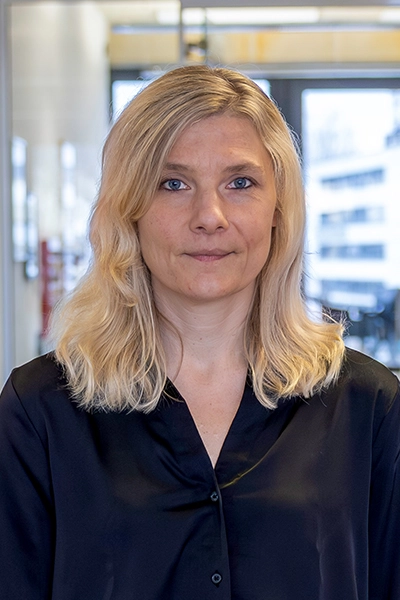


“We now have a fixed order and structure. ”
For a company like RheinEnergie, with an annual turnover of 4.07 billion euros in 2023 and numerous data initiatives already underway across 15 divisions, developing a cross-divisional data strategy is a central task. Together with taod, the Cologne-based company plans to accelerate its data practices through a dedicated strategic orientation. In this interview, strategy and business developer Dr. Heiner Lütjen from RheinEnergie and Ben Köhler, senior data consultant at taod, discuss how theoretical work with data can drive practical business success.
Heiner, what role does data play in your everyday life?
Heiner Lütjen: Naturally, I deal with data and AI extensively in a professional context. RheinEnergie also provides me with the opportunity to participate in the ada fellowship program, where I am currently collaborating with managers from other companies on a joint project to implement and utilize an AI chatbot. In my private life, the topic of digitization also accompanies me in my volunteer work. I support senior citizens in acquiring digital skills. This requires patient guidance, simple explanations, and appropriate exercises tailored to the needs and knowledge levels of the participants. In particular, the simple, audience-oriented communication required there helps me to explain complex topics more easily in my everyday working life as well.
Ben, do you spend a lot of time with data in your private life?
Benedikt Köhler: I wouldn't call myself a hyper-digital person, but of course, it's hard to escape the world of data in your private life these days. I am primarily active with financial data—I enjoy digging into that and using Power BI for my analyses.
The value-creating use of data is a critical issue for companies. What are the key drivers at RheinEnergie for engaging with data?
Heiner: At RheinEnergie, we have several drivers for working intensively with data. One major factor is certainly the increasing transformation pressure on energy suppliers. Particularly regarding our various customer segments, we must communicate in a more targeted manner and test new products and services more quickly to meet evolving customer expectations in the face of growing competition.
However, to achieve this, we also need improved data quality in our processes. High data quality is essential for successful data utilization, as it ensures that the information and insights obtained are reliable and actionable. If the data quality is lacking, it can lead to incorrect decisions with potentially significant financial and strategic consequences for our business.
We also shouldn't forget that we want to support our employees in expanding their data literacy through suitable training formats and tools. These are just a few of the internal and external drivers that indicate we will continue to focus heavily on data in the future.
You are already well-positioned in this area, have various data initiatives, and are actively tackling these topics. But it sounds like you aren't fully organized everywhere yet and that you still lack certain competencies here and there.
Heiner: Which company would claim they are already at the top across the board? Naturally, we will need to make many adjustments in the future. Like many other companies, we face the challenge of collecting, managing, and effectively utilizing consistent, complete data. This data often originates from disparate systems that aren't always interconnected, making it difficult to integrate into a unified database. As a company with diverse areas of expertise, we also need clarity regarding roles and responsibilities. We require central data governance that establishes standards and processes for data quality, defines clear responsibilities for various roles, and identifies the interfaces between centralized and decentralized areas.
Another challenge for us is bringing our employees, with their different areas of focus, along on this transformation journey and shaping competency development accordingly. Against this backdrop, it was clear to us that we needed well-thought-out data strategy planning and close cross-functional cooperation between IT, strategy, and the specialist departments.
What is the status quo in other companies, Ben?
Ben: On an abstract level, I can see that the challenges are the same in many places. Data quality is, of course, always an issue, especially when you're thinking about AI. We receive very different inquiries about this. The vast majority of companies operate in the brownfield—meaning they have to deal with legacy issues and drive development forward rather than just relying on detached new initiatives. The topic of data strategy usually only surfaces when you realize that too many independent initiatives mean your fields of action are becoming too broad. Then you have to ask yourself which direction you actually want to head in, or what the overarching problems are within a corporate structure, for example.
What role does company size play at this stage?
Ben: There is a clear difference between creating a data strategy for a medium-sized company, where you can rely much more specifically on the core business, and working out a common denominator, as we did with RheinEnergie. In that case, we had very independent, decentralized areas and wanted to see what synergies we could exploit. We had a lot of very different tasks and content to manage. A small company can change faster, define completely different types of goals, and has fewer people to bring on board.
Heiner: That's right.
Ben: With such large companies, a lot of internal politics and communication is required just to turn the tanker by five degrees.
How do you go about that?
Ben: It really depends on the size and how specific the tasks are. When it comes to organizational development, the inquiries are usually very specific, along the lines of: “We need a data team, can you help us set it up?” In a purely strategic project, we must first understand the company's situation and its value creation processes so that we can determine what role data must play in the future to deliver actual added value.
Sometimes we also have to challenge the customer's request first and see whether we might need to scale back specific target formulations in order to then take smaller strategic steps.
“Sometimes we also have to challenge the customer's request.”
I hear from both of you that companies are already in the middle of setting up data initiatives and buying and using technologies. At some point, however, they seem to reach a point where they say: “We're not getting anywhere here, we need help.” Heiner, at what point did you realize that an outside perspective could help you, leading you to pursue a data strategy?
Heiner: For us, there were three main reasons for this: speed, objectivity, and external expertise. It was clear to us from the start that we wanted to strongly involve our specialist departments to ensure a high level of commitment to the results. The many interviews and workshops with the departments were time-consuming, but provided great added value in terms of content for a sustainable end result. Ben just mentioned it: In a company with 2,500 employees, you have to engage many employees and managers at different hierarchical levels to create commitment and conduct effective stakeholder management. We decided that we wouldn't be able to implement this quickly enough on our own, and we wanted a result as soon as possible that the divisions could continue working with.
And the other reasons?
Heiner: We also wanted an external, unbiased perspective to identify blind spots and established patterns in the company that might be a hindrance. At the beginning of the project, we carried out a status quo analysis. It was also helpful to see how we are actually performing compared to the competition and what our pain points are. Is that just our own perception, or do other companies feel the same way? To develop a structure or roadmap together, with appropriate fields of action, we were looking for a sparring partner.
And, of course, data strategies require in-depth expertise in data architecture, data management, analytics, AI, and legal frameworks. Here, we also wanted to gain specialized expertise through external advice.
“At the start of the project, we sharpened the content focus and also adjusted the project goals.”
What goals did you want to achieve with an overarching strategy?
Heiner: Yes, that was very interesting. Ben also noticed: At the start of the project, we sharpened the content focus and also adjusted the project goals. In the beginning, my idea was actually that we could work on content topics more intensively. For example, discussing a data governance model with colleagues, or perhaps taking the <a href="https://www.taod.de/services/data-engineering-consulting" data-webtrackingID="blog_content_link" >first steps to evaluate future data infrastructures</a>. The colleagues from taod had already presented this with their data mesh concept.
But?
Heiner: The longer we discussed this with the departments and the sponsors (Budget provider for the strategy project, editor's note), the sooner we realized that the first step was actually about establishing core premises for RheinEnergie. For example, defining that data is a business asset for us and that we want to align our corporate strategy with this moving forward. We also wanted to anchor the topic of data more firmly in our corporate culture to enable data-driven decision-making and continuous testing & learning. With these premises, we created clarity and a shared understanding.
The second main goal, which we have just identified, was to bring a certain order and structure to the topics we want to implement. In other words, to define a roadmap of action areas and then assign responsibilities to them. At the end of the day, these were the two key results: the premises and the action areas with assigned responsibilities that we are now implementing.
That sounds like you were questioning your original requirements, as Ben just mentioned.
Heiner: At the beginning, my expectation was that we would get more involved in discussing the content of our action areas. It was about building competencies in the respective areas, about data infrastructure, and we had already talked about many topics, such as data quality and governance. But in the strategy project, we didn't get too deep into the technical design of the action areas.
Ben: I felt the same way. I think that was also part of the discovery process. Because no one—neither you nor us—would refuse to push ahead with specific content. But that wasn't easy because it required a lot of stakeholder management, and there were so many different starting points in the areas involved. For example, some had already developed data governance, while others had not.

It sounds like a major challenge to bring existing data work to an early, abstract level.
Ben: If we had said in January that we were now doing central governance, some areas would have pointed out that they already had one, others would have asked about the costs, and some would have thought they didn't need one at all. With the data strategy, we resolved a great deal of organizational friction. As a result, everyone was involved, and the scale of the project became all the more obvious. It’s a project that has been approved by the Executive Board and already involves three major divisions.
“I see it as a strength of the strategy that it is also a bit abstract.”
The data strategy—and that’s straight out of a textbook—enables existing corporate goals. I see it as a strength of the strategy that it is somewhat abstract, allowing you to derive the actual work from it. It is a success for RheinEnergie that everyone is now pulling in the same direction when it comes to data issues. Without this project, we would have been far from achieving that.
Heiner: I see what you describe as abstract as both a strength and a weakness. Naturally, many employees have the understandable desire for a data strategy to specify exactly what needs to be done. However, we haven't developed an action plan based on the motto, “We must implement this measure tomorrow so that we see results the day after.” In my opinion, that isn't the purpose of a data strategy.
The purpose of a strategy is to bring order and structure to relevant areas of action, to prioritize them, and to arrange them chronologically, rather than anticipating every detail of the outcome. As a strategy department, we must build a bridge between long-term strategy and its practical application within the various divisions. This sometimes clashes with employee expectations. But that is exactly what implementation is for, which we now intend to tackle with great determination. Of course, as a strategy department, we must build that bridge and develop the transition to the operational level in collaboration with those divisions.
“As a strategy department, we must build a bridge between long-term strategy and its practical application within the various divisions.”
Ben: If you used a simple backlog as a strategy document, you’d be in the same position a year from now, just with new problems. Of course, in a year or two, we will need to discuss new areas of action or adjustments to the data strategy. But those will be much easier conversations because you won't just be jumping from one problem to the next; you will be able to assess the status quo for specific topics based on previous experience and objectives.
Heiner: From my perspective, that is exactly the crux of the matter. With your support, we managed to complete a short, concise strategy project on a relatively tight schedule. You have to formulate a data strategy quickly, then quickly demonstrate initial successes with specific use cases, and then move on to implementing larger projects.
Ben: The specific discussions and projects can now get off to a very good start. Everyone is on board and working toward the same goal. The motivation is high. It is also an ambition of a strategy project that people feel included and want to get started, rather than feeling exhausted by all the problems discussed. I think we succeeded in that.
Data Strategy in Practice
From Pilot to Master Plan: Read our white paper on data strategy!
Read the white paper now!
How does developing a strategy work with so many different levels and stakeholders, Ben?
Ben: Involving opinion leaders within the company is a vital foundation. Together with stakeholders and sponsors, they are among the most important sources of input for a project like this. One thing is clear: in an organization of this size, it’s not about developing the “right” plan and pushing it through from the top down; it’s about getting people who are already active in data to get involved—finding solutions and then implementing them. By involving these groups, you not only get high-quality results but also commitment from the key opinion leaders who helped shape those results.
How exactly did you proceed?
Heiner: We have a total of 15 divisions. We knew we couldn't start with all of them at once. At the same time, we naturally want to support as many areas as possible in the future. That’s why we decided to start with the network division and the three sales divisions. We began with these four areas to develop a kind of blueprint for the relevant fields of action. We now want to gradually integrate other areas and address their needs.
Speaking of interviews, Ben. You opted for a workshop-based approach to developing the strategy. Why?
Ben: A structured workshop format, combined with the right tools, is the fastest way to process a large amount of input. This allowed us to capture employee feedback even during relatively short one- or two-hour sessions. Workshop formats help establish comparability and identify varying focuses or priorities.
Heiner, did you find the methods effective?
Heiner: I really liked the methods. It made sense to start with workshops in each area to bring people together locally and build a common understanding. The interviews in between were also effective. We did a lot of work in Miro and used formats that required a high level of participation. That worked well.
“We now have a fixed order and structure, we know which topics we want to work on, and we have clear priorities as a company.”

The strategy implementation has now begun. How is that going so far?
Heiner: We now have a fixed order and structure, we know which topics we want to work on, and we have clear priorities as a company. I think this is quite transferable to many companies in our industry. We are currently developing a concept with our divisions on how to maintain this implementation speed.
ben: I think anchoring the data strategy within the company worked very well. First, everyone is convinced by the result and knows that the real work starts now. Second, we have created structures to drive the data agenda at RheinEnergie in the long term.
Heiner: For me, as Ben just mentioned, the decisive factor was defining responsibilities with the individual stakeholders and determining the degree of centralization. Given the size of the company, we cannot centrally control everything from strategic corporate development and IT. We must always balance issues that can be implemented by the departments themselves with topics that must be organized centrally for all of RheinEnergie and on which we should collaborate. Our idea is to take a flexible approach to implementation now. We are trying to develop certain areas of activity on a smaller scale with selected market areas and then roll them out to others. Otherwise, we would constantly face the situation of having to discuss a single field of action with 15 departments and at least 15 contacts in large workshops. Ultimately, the communication effort is too high at the start. We need to proceed gradually and in waves.
Do you have an example?
Heiner: Data governance, for instance, has been developed across three distinct areas. We aren't suggesting that other market areas will be added during the initial workshops, but they will naturally need to engage with the results moving forward. Instead, we are defining various roles within these action areas in coordination with the respective departments, allowing for a gradual integration that avoids overextending resources. Another example is the systematization of competency development. This also requires a variety of concepts tailored to the specific needs and requirements of each specialist area. However, implementing everything simultaneously will be challenging, so we will need to establish clear priorities.
How are you organized?
Heiner: We have established three formats for implementation. The first is the strategic anchoring of the strategy process—a top-down discussion with the Executive Board. We use this to adjust the data strategy annually and update strategic priorities as needed. The second format is a steering committee where we coordinate quarterly with selected department heads to review whether our action areas are still relevant, assess progress, and determine if we need to adjust, launch, or close specific initiatives. The third format is classic multi-project management at an operational level. Here, we meet with all action area leads to get a quick status update and address specific challenges.
Who are the key points of contact?
Heiner: IT and strategic corporate development will jointly manage the organization moving forward. Additionally, a data team, which has been in development for a few weeks, will be heavily involved in the implementation.
How is the data team composed?
Heiner: It was recruited internally from various departments. These employees are no longer tied to a single area but work on topics across the entire organization. Since September, we have also had a new team lead who is now systematically developing the core content areas with his team.
What do the next three to six months look like for you?
Heiner: We are now beginning implementation in the first action areas. We want to bring our colleagues along on this journey and get them excited about these topics; communication is crucial here. We started with data governance, where our goal is to quickly define roles and responsibilities so we can move on to other action areas.
What advice would you give companies regarding when to seek external help for a data strategy?
Heiner: If speed is a priority and you need an objective perspective, developing a data strategy with external support is a great option. Conversely, if you have sufficient internal resources, you can start on your own and bring in support for the implementation phase. The two approaches aren't mutually exclusive; it always depends on your specific context and framework.
“I see organizational ambidexterity as a key success factor for the future. On one hand, we need to do our homework by refining operational processes in our day-to-day business—for instance, by improving data quality, automating repetitive tasks, or enhancing existing products with new data sources. On the other hand, we need to start exploring applications that look further ahead.”
A quick look into the future: What data trends or capabilities do you foresee over the next two years?
Heiner: I see organizational ambidexterity as a key success factor for the future. On one hand, we need to do our homework by refining operational processes in our day-to-day business—for instance, by improving data quality, automating repetitive tasks, or enhancing existing products with new data sources. We can't afford to neglect this, or we'll lose momentum in our transformation. On the other hand, we need to address future use cases today. The goal here should be a clear focus on innovation, experimentation, and testing new business ideas. We must actively build both capabilities now to remain competitive.”
Ben: It’s no secret that Generative AI is a game-changer. I’m still wrapping my head around all the implications, and I think most people are, as the upcoming changes are incredibly profound. With <a href="https://www.taod.de/genai-prototyp" data-webtrackingID="blog_content_link" >GenAI</a>, we have the opportunity to treat qualitative data as if it were quantitative. This means companies can automate the processing of text data—work that was previously done manually—across the board without sacrificing quality. This level of capability hasn't been possible until now, and there are still many impressive milestones ahead of us.
Thank you, Heiner and Ben!
Sources:
https://www.rheinenergie.com/de/unternehmen/newsroom/nachrichten/news_72146.html
Need help with your data strategy?
FAQs
Eine Datenstrategie schafft Klarheit darüber, welche Rolle Daten für die Unternehmensziele spielen und wie sie wertschöpfend genutzt werden können. Sie hilft, bestehende Dateninitiativen zu bündeln, Prioritäten zu setzen und Verantwortlichkeiten festzulegen – besonders in großen Organisationen mit vielen Fachbereichen.
Typische Herausforderungen sind uneinheitliche Datenqualität, verteilte Systeme, unklare Zuständigkeiten und unterschiedliche Reifegrade in den Fachbereichen. Hinzu kommt die Aufgabe, Mitarbeitende und Führungskräfte mitzunehmen und ein gemeinsames Verständnis für den Umgang mit Daten zu schaffen.
Externe Unterstützung bringt Geschwindigkeit, Objektivität und spezialisiertes Fachwissen in den Strategieprozess. Ein neutraler Blick hilft dabei, blinde Flecken zu erkennen, bestehende Annahmen zu hinterfragen und gemeinsam mit den Fachbereichen eine tragfähige Roadmap zu entwickeln.
Eine erfolgreiche Datenstrategie definiert gemeinsame Prämissen, priorisierte Handlungsfelder und klare Verantwortlichkeiten. Sie schafft eine feste Ordnung und Struktur für die Umsetzung und bildet die Grundlage dafür, Data Governance, Kompetenzaufbau, Datenqualität und neue datengetriebene Use Cases gezielt weiterzuentwickeln.